

Job Corps furniture requirements come down to one practical reality: these are residential facilities for young adults in active training programs and furniture has to hold up to that.
Furniture for Job Corps housing needs to survive institutional-level daily use, meet Department of Labor facility standards,as well as move through the right federal procurement channel (whether that’s GSA Schedule 71, a SAM.gov solicitation, or an operator-managed purchase).
In this short guide, I will walk you through what furniture Job Corps centers need and how the procurement side works in practice.
What Furniture Job Corps Centers Need
A Job Corps center is really several environments under one operating contract and each one has its own furniture list. Let’s go through them one by one:
- Dormitory and residential units. Beds (bunk and standard) sized for occupancy density, institutional-grade mattresses, dressers or lockers for personal storage, a desk and task chair per resident, plus mirrors and lighting for daily use.
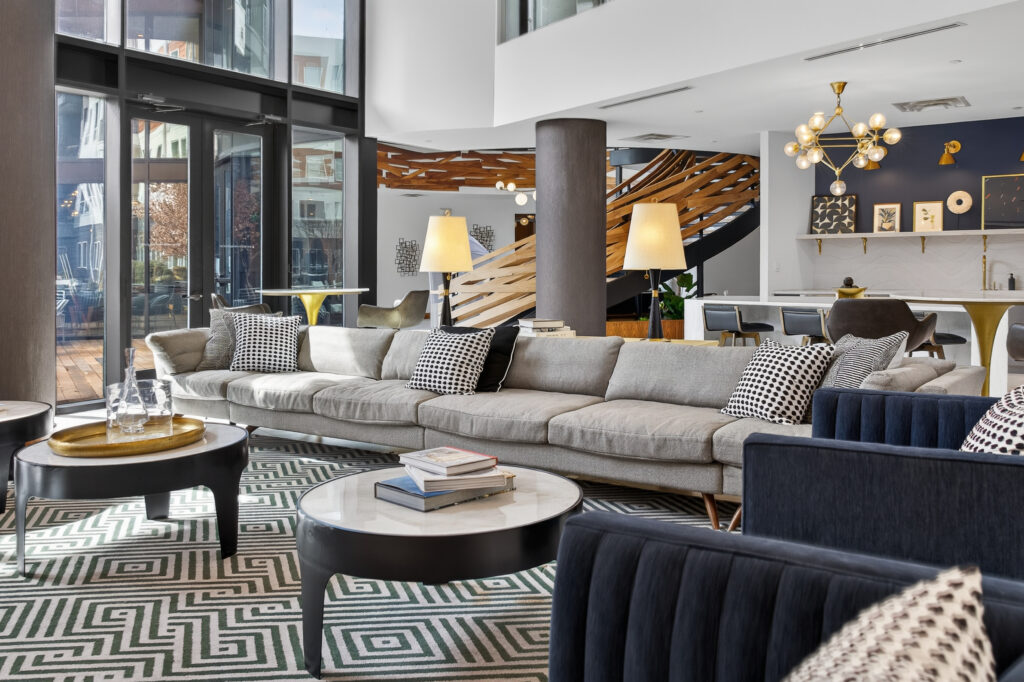
- Common areas. Lounge seating, TV and media areas, game room furniture and seating for study or computer rooms. These spaces see constant turnover of users and need to hold up to that.
- Dining. Cafeteria-scale tables and chairs and serving-area furniture where meal service requires it. Capacity here has to match center enrollment, not just room size.
- Staff areas. Office desks, task chairs, meeting room furniture and reception furniture for administrative and residential advisor staff.
- Outdoor. Weatherproof seating and tables for courtyards, recreation areas, or outdoor gathering spaces. That’s an increasingly important part of center programming rather than an afterthought.
That’s the full inventory. The next section gets into the standards each of these categories has to meet and the one after that breaks dorm, common area and dining furniture down by spec.
DOL Facility and Durability Standards
Job Corps centers operate under standards set by the Department of Labor’s Employment and Training Administration, laid out in the Job Corps Policy and Requirements Handbook.
Furniture isn’t a side note in that framework. Chapter 5’s facility standards and CRA (Center Reinvestment Appropriation) sections both treat furniture and furnishings as part of the physical environment centers are required to maintain and fund.
A few things to keep in mind when specifying:
Facility standards
Centers must meet applicable federal, state and local codes. Furniture is part of what gets assessed during facility compliance reviews. When a National Office project touches a dormitory, cafeteria, or new center, furniture selection typically runs through the ESC (Engineering Support Contractor) design and CRA funding request process. That’s something worth knowing if you’re coordinating a larger buildout rather than a routine replacement.
Flammability
Mattresses fall under 16 CFR Part 1633 (open-flame standard) and 16 CFR Part 1632. Upholstered furniture is commonly specified to CAL 117 or NFPA 260. Both are established benchmarks in institutional and dormitory settings and either is a reasonable spec to require from a supplier.
Accessibility
ADA compliance applies to common areas and any space used by students or staff with disabilities.
Lifecycle
Given turnover and usage intensity, contract-grade furniture is the right spec, not a consumer line dressed up as commercial furniture.
This regulatory picture applies broadly across federal residential facility furniture. And it’s a useful context if your organization also supports other DOL or HHS residential programs.
Dorm Room vs. Common Area vs. Dining Requirements
If you’re planning a refurbishment or a new center buildout, this is the section to work from directly. Each space has its own load, its own wear pattern and its own spec. Treating them as one generic “institutional furniture” order is where most projects run into trouble. Here’s what to specify for each.
Dorm room furniture
Bunk beds are standard in most centers, driven by occupancy density. Specify institutional-grade steel or solid-wood frames rated above 500 lbs. This isn’t a place to compromise, since these frames see years of daily use by a rotating student population.
Every resident needs a lockable storage option: a dresser with a locking drawer or a dedicated locker, plus a desk and task chair for study time. On mattresses, look for a minimum 6-inch innerspring or foam core with an institutional fire-retardant cover meeting the flammability standards covered above.

Common area furniture
Lounge seating has to survive heavy daily use. Commercial upholstery rated for 250,000+ double rubs is a reasonable baseline, not an upsell. Modular seating configurations give you flexibility as programming or room use shifts and pieces with simple, low-maintenance cleaning requirements save real time for facilities staff over the life of the piece.

Dining furniture
Institutional dining tables (fixed-base or folding) paired with stacking chairs handle volume seating and make cleaning and reconfiguration straightforward. Where food contact is a factor, NSF-rated surfaces apply.
On capacity: Job Corps centers typically house 100–400 students and dining furniture should seat at least 50% of capacity per seating rotation to keep meal service moving without bottlenecks.
We’ve seen this pattern hold across institutional residential projects generally. The spec gap between “looks durable” and “tested for 250,000 double rubs” is where most premature furniture failures happen.
| Space | Furniture | Key Ssec |
|---|---|---|
| Dorm rooms | Bunk beds | Institutional-grade steel or solid-wood frame, 500+ lb weight rating |
| Storage | Dresser with locking drawer or dedicated locker (one per resident) | |
| Study | Desk and task chair per resident | |
| Mattress | Min. 6-inch innerspring or foam, institutional fire-retardant cover (CFR 16 Part 1633) | |
| Common areas | Lounge seating | Commercial upholstery rated 250,000+ double rubs |
| Configuration | Modular, low-maintenance cleaning requirements | |
| Dining | Tables | Fixed-base or folding, institutional grade |
| Chairs | Stacking, for volume seating and easy cleaning | |
| Surfaces | NSF-rated where food contact applies | |
| Capacity | Seat at least 50% of center enrollment per rotation (centers typically house 100–400 students) |
How Procurement Works: GSA, SAM.gov and Competitive Bids
This is the section most facility managers need. There are tree routes, each with a different pace and a different level of contracting effort.
GSA Multiple Award Schedule Furniture & Furnishings (formerly Schedule 71).
Worth a naming note first: GSA folded the legacy Schedule 71 (furniture) and Schedule 72 (furnishings and flooring) into a single Furniture & Furnishings category under the Multiple Award Schedule program.
Suppliers on this schedule can sell directly to Job Corps centers without a full competitive solicitation, for purchases within the simplified acquisition threshold. Currently $350,000, up from $250,000 as of October 2025.
This is the fastest route: pre-negotiated pricing, pre-vetted suppliers and streamlined ordering under FAR Subpart 8.4. That said, confirm your center’s contracting office policy. Some require competitive quotes even below the threshold, regardless of what the FAR technically allows.
SAM.gov competitive solicitations
For larger refurbishment projects or new center buildouts, the operator or the DOL contracting office issues a solicitation and qualified suppliers submit proposals. Expect a longer runway. Typically 60 to 120 days from RFP to award. And suppliers must be registered in SAM.gov to bid at all.
Operator-managed procurement
Some center operators have discretion to procure furniture directly within their operating contract budget, without running a full federal solicitation, provided they follow their organization’s procurement policies and the DOL contract requirements.
If you’re not sure where that line sits for your center, that’s a conversation with your contracts office before you commit to a purchase path.
One practical note to close this out: engage a supplier early. GSA-listed suppliers can be engaged immediately since the contracting step is already handled. Non-listed suppliers add contracting time you’ll want to plan around, especially against a fiscal year deadline.
See how TNT handles FF&E procurement for federal and institutional projects.
What to Look for in a Furniture Supplier for Federal Programs
Three things separate a supplier who’s a fit for this work from one who isn’t. Use this to vet anyone you’re considering.
GSA Schedule registration
- Supplier is currently listed on the Furniture & Furnishings Multiple Award Schedule (formerly Schedule 71).
- If not listed, supplier has a clear, documented alternative path to contract (e.g., subcontracting through a schedule holder, or bidding via SAM.gov).
- Supplier can confirm their schedule contract number and pricing terms on request.
- Being on-schedule is verified (not just claimed) before it factors into your procurement timeline.
Institutional residential experience
- Supplier can point to completed dormitory-scale or institutional residential projects, not just general office furniture work.
- Supplier has direct experience with bunk bed configurations and the weight/durability ratings this setting requires.
- Supplier understands lockable storage requirements and can spec accordingly.
- Supplier can speak to flammability and durability standards (CFR 1633, CAL 117, NFPA 260) without you having to explain them first. It’s a sign they’ve done this before.
Installation capability at scale
- Supplier offers full-service installation, not drop-ship-only delivery.
- Supplier can coordinate installation timing around the center’s programming and move-in schedule, not just their own logistics.
- Supplier has crews experienced with multi-unit dormitory installs, not single-room commercial setups.
- Supplier provides a project point of contact for the duration of installation, not a one-time delivery confirmation.
We supply and install institutional-grade furniture for workforce housing furniture suppliers across the workforce housing and federal residential sector and this is where that distinction matters most: the gap between a supplier who sells furniture and one who delivers a finished, functioning space on schedule.
Furnishing a Job Corps Center or Federal Residential Facility?
TNT Commercial supplies and installs institutional-grade furniture for workforce housing and federally operated residential facilities.
Frequently Asked Questions
How does furniture procurement work for Job Corps centers?
Job Corps furniture procurement runs through federal contracting channels. The most common routes are GSA Schedule 71 (the federal furniture schedule, which allows direct purchase without a full competitive bid under the simplified acquisition threshold), competitive SAM.gov solicitations for larger projects and operator-managed procurement within the bounds of the center’s operating contract with the DOL.
What furniture standards apply to Job Corps dormitories?
Commercial (contract-grade) furniture is the correct specification for workforce and student housing programs. Residential furniture fails faster in high-turnover environments and costs more over time when you factor in replacement cycles. Contract-grade furniture costs more per unit upfront but lasts 2–3x longer, reducing total cost over a 5–7 year hold period.
What is GSA Schedule 71 and how does it apply to Job Corps furniture?
GSA Schedule 71 is the federal supply schedule for furniture. Suppliers listed on Schedule 71 can sell directly to Job Corps centers and other federal facilities without a full competitive solicitation for purchases below the simplified acquisition threshold. It is the fastest procurement route for furniture and significantly reduces contracting lead time compared to a SAM.gov RFP process.
What type of beds are used in Job Corps dormitories?
Most Job Corps centers use bunk beds in dormitory rooms to accommodate occupancy density requirements. Institutional-grade steel or solid-wood bunk frames with weight ratings above 500 lbs are standard. Each resident also requires individual lockable storage, typically a dresser with a locking drawer or a dedicated locker and a desk and task chair for study requirements.

 info@tntcommercial.com