

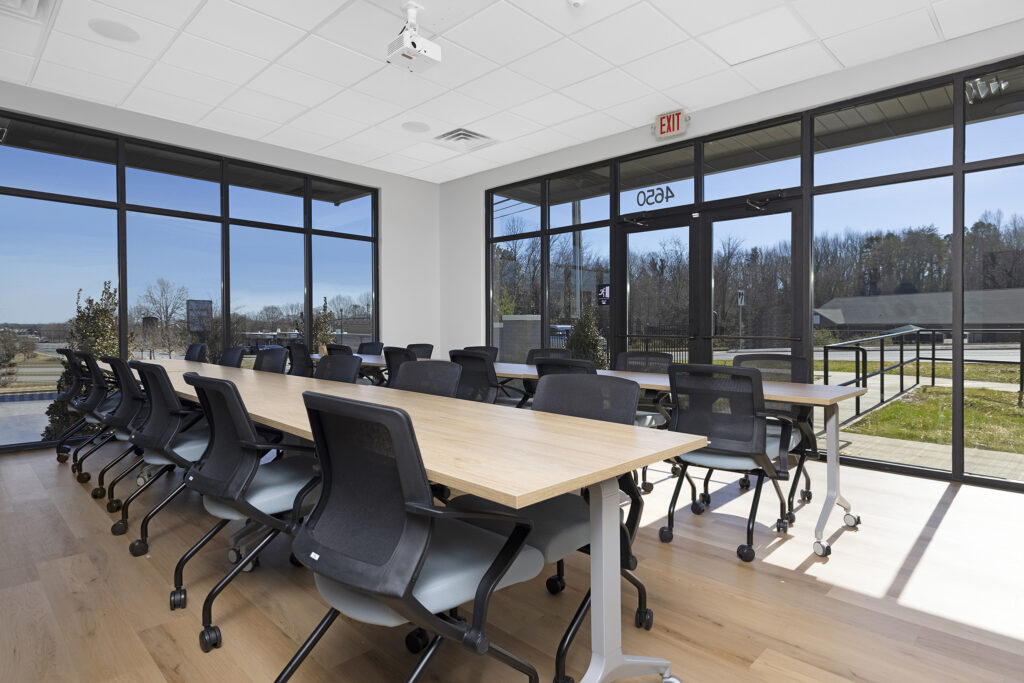
If you’ve built a construction budget before, you know how this usually goes when it comes to FF&E.
FF&E gets a placeholder number early on, because nobody has real quotes yet. Then the project moves forward, quotes finally come in and it turns out that placeholder was too low. Now you need to find extra money mid-project, when there’s the least flexibility to find it.
However, it doesn’t have to go that way. This guide walks through the FF&E budget breakdown. I’ll cover what it typically costs as a share of your total budget and the costs interior designers tend to forget to plan for. In the end, I’ll share an FF&E budget template you can use as a starting point for your own project.
What is FF&E in Construction
FF&E stands for furniture, fixtures and equipment – everything that goes into a space once the building itself is done.
Before you can budget for it, you need a clear line around what it covers. This is where a lot of early budgets go wrong. Items get double-counted with the base build, or left out entirely because nobody was sure whose line they belonged on.
| Included in FF&E | Excluded from FF&E (base build) | Grey area (varies by contract) |
|---|---|---|
| Furniture and seating | Structural elements | Built-in cabinetry |
| Workstations and desks | Fixed joinery built into the base build | Integrated lighting |
| Storage units | HVAC | |
| Window treatments | Electrical | |
| Moveable partitions | Plumbing | |
| Decorative lighting | Permanent built-ins | |
| Soft furnishings |
Built-in cabinetry, for example, sometimes falls under FF&E and sometimes under base build, depending on how the contractor’s scope is written. Integrated lighting has the same problem. It can sit with FF&E or with MEP (mechanical, electrical, plumbing) work. There’s no universal rule here.
At TNT Commercial, we recommend confirming the FF&E scope in writing at the start of the interior design project, in the contract itself. This way, a single line of clarification here can save you from a budget dispute later.
FF&E as a Percentage of Total Project Budget
Once scope is settled, the next question is usually: how much of the total project budget should FF&E take up? The answer depends heavily on project type, but there are reliable planning benchmarks.
| Project type | Total construction budget (example) | FF&E as % of total (low / typical / high) | Per-SF FF&E allowance |
|---|---|---|---|
| Office | $2M–$10M | 8% / 11% / 15% | $15–$45/SF |
| Hospitality | $3M–$20M+ | 15% / 20% / 25% | $30–$90/SF |
| Healthcare | $5M–$25M+ | 12% / 16% / 20% | $25–$70/SF |
| Retail | $500K–$5M | 10% / 14% / 18% | $10–$35/SF |
*Figures reflect 2025–2026 US market conditions.
Commercial fit-out cost, for example, is often around 13–16% of total cost, though it can vary roughly from 10–25%. Here’s how much companies across the world spend on fit-out, according to the Global Office Fit-Out Cost Guide 2025:

These are planning benchmarks, not quotes. Actual figures shift based on specification grade, how much of the product is custom versus standard and current market pricing.
FF&E Procurement Cost Per Category
The next step is pricing at the category level. This is where a budget stops being a placeholder and starts being usable. The ranges below reflect entry-level, mid-range and premium tiers across the categories that make up most commercial FF&E spend.
| Category | Entry-level (per unit) | Mid-range (per unit) | Premium (per unit) | Notes |
|---|---|---|---|---|
| Task seating | $150–$250 | $300–$600 | $700–$1,500+ | Entry = in-stock commercial-grade |
| Executive & lounge seating | $400–$700 | $800–$1,500 | $2,000–$5,000+ | Premium = custom/designer upholstery |
| Workstations & desks | $400–$800 | $900–$1,800 | $2,000–$4,500+ | Systems furniture costs more to install |
| Storage & filing | $200–$400 | $450–$900 | $1,000–$2,500+ | Fire-rated units run higher |
| Conference & meeting tables | $800–$2,000 | $2,500–$6,000 | $7,000–$20,000+ | Size and finish drive the range |
| Reception furniture | $1,500–$4,000 | $5,000–$12,000 | $15,000+ | Often custom millwork-adjacent |
All prices per unit unless noted. Mid-range reflects contract-specified standard product, commercial grade, US market 2025–2026.
A quick way to read this table: entry-level covers in-stock commercial-grade product you could order and receive quickly. Mid-range is the default assumption for most budgets: contract-specified, standard finishes, reliable lead times. Premium is custom or designer contract product, where cost is driven as much by specification and lead time as by materials. To learn more about furniture requirements, check out our commercial furniture buying guide.
Hidden Costs to Budget For
Product cost is only part of the number. The gap between “furniture budget” and “all-in FF&E budget” is where mid-project budget crises usually start.
| Cost item | Typical range or % of product cost | Notes |
|---|---|---|
| Delivery and freight | 8–15% of product cost | Higher for bulky items, multi-floor buildings, remote sites |
| Installation and assembly | 10–20% of product cost | Higher for systems furniture or healthcare/technical environments |
| Disposal of existing furniture | $500–$5,000+ | Depends on volume and recycling requirements |
| Storage and commercial staging | $300–$1,500/month | Applies if delivery is phased |
| Project management | 5–10% of total FF&E cost | For full-service procurement |
| Contingency | 5–10% | Covers discontinued product, damage, lead time shifts |
A construction project budgeted at $150,000 for product only will typically land at $185,000–$210,000 all-in, once delivery, installation and contingency are folded in. Buyers who don’t plan for this gap upfront are usually the ones facing a mid-project scramble to find the difference.
Need an FF&E Budget Built Around Your Project?
TNT Commercial handles FF&E procurement end-to-end. We handle specification, sourcing, delivery and installation in-house. Contact us to build a detailed cost estimate.
Sample Budget Template by Project Size
This is the piece most people came here for. Treat it as a starting point you can drop into a spreadsheet and adjust for your own project. It’s built from the per-category ranges above, aggregated across three common project sizes.
| Line item | Small (under 2,500 SF / 10–25 people) | Medium (2,500–10,000 SF / 25–100 people) | Large (10,000+ SF / 100+ people) |
|---|---|---|---|
| Task seating | $2,250–$9,000 | $7,500–$36,000 | $30,000–$150,000+ |
| Executive & lounge seating | $2,400–$7,500 | $6,000–$30,000 | $24,000–$120,000+ |
| Workstations & desks | $9,000–$27,000 | $22,500–$108,000 | $90,000–$450,000+ |
| Storage & filing | $2,000–$9,000 | $6,750–$36,000 | $27,000–$150,000+ |
| Conference furniture | $2,500–$8,000 | $7,500–$36,000 | $30,000–$150,000+ |
| Reception furniture | $3,000–$10,000 | $6,000–$18,000 | $15,000–$45,000+ |
| Product subtotal | $21,150–$70,500 | $56,250–$264,000 | $216,000–$1,065,000+ |
| Delivery & freight (12%) | $2,540–$8,460 | $6,750–$31,680 | $25,920–$127,800 |
| Installation (15%) | $3,170–$10,575 | $8,440–$39,600 | $32,400–$159,750 |
| Contingency (8%) | $1,690–$5,640 | $4,500–$21,120 | $17,280–$85,200 |
| Total range, all-in | ~$28,500–$95,000 | ~$76,000–$356,000 | ~$291,000–$1,438,000 |
Assumptions: mid-range commercial-grade specification; US market 2025–2026 pricing; delivery and installation applied at 12% and 15% of product subtotal respectively; 8% contingency built in. Per-category figures assume typical quantities for each size tier, not a fixed headcount formula. Adjust rows up or down based on your actual seat count and program.
I must note that these are planning figures for early-stage budgeting. A detailed FF&E number requires a full scope brief and direct engagement with suppliers, but this template should get you close enough to build a defensible budget line before that process starts.
If you’d rather skip straight to actual costs for your project, TNT Commercial handles FF&E procurement end to end, from specification through installation.
How to Handle FF&E Budget Overruns
Even with a solid template, overruns might happen. Here are some steps our procurement team follows for cost control during the project:
Step 1. Identify where the overrun is
Separate product cost overruns from delivery and installation overruns. They come from different problems and need different fixes.
Product overruns are usually a specification or scope issue. Logistics overruns are more often a site or schedule issue, like a delayed floor, a tighter install window, or a freight surcharge nobody priced in.
Step 2. Audit the specification tier
Look at where the money is concentrated before you look at where to cut.
Conference tables and reception furniture are typically the highest-cost, highest-variance categories. A small spec change here can recover real money. Task seating and storage sit in a tighter, more predictable price range and cutting there tends to affect daily function more than it saves.
Step 3. Revisit scope
Before pushing vendors on unit pricing, check whether the scope itself has grown since the original commercial FF&E budget was set. Added headcount, extra meeting rooms and upgraded finishes are the most common sources of unplanned spend, and none of them are a pricing problem. They’re a scope problem, not a pricing problem.
Step 4. Phase the procurement
If the full budget isn’t available at once, stage delivery by priority zone. Leased or revenue-generating areas go first; back-of-house and storage areas go last. This spreads the cost across budget cycles instead of forcing a single large hit and it doesn’t delay occupancy.
Step 5. Get a revised quote
A vendor who simply discounts unit prices is usually cutting margin on the same specification, which rarely holds up over a full project. A revised quote that value-engineers specific items (an alternative product, a different lead time, consolidated delivery) is a more durable fix than a price shave.
Step 6. Rebuild the contingency
Once an overrun is resolved, add it back into the contingency line before moving on. A project that has already hit one overrun is statistically more likely to hit a second. A 5% contingency that’s been spent needs to be rebuilt, not left at zero heading into the next procurement phase.
With all that being said, the most reliable way to avoid overruns in the first place is a detailed scope brief and vendor engagement early, before the budget is locked. Projects that bring in a procurement partner at design stage, rather than at tender stage, almost always land closer to budget.
Conclusion
FF&E doesn’t have to be a budget surprise. Start with the percentage benchmarks and per-category ranges in this article. They give you a starting point that’s grounded in real project data.
From there, plan for the hidden costs from day one: delivery, installation and contingency. These are part of the number from the start.
The template here will get you to a defensible planning figure, but a project-specific number still requires a scope brief and vendor engagement. When you’re ready for that step, TNT Commercial’s FF&E procurement team can take it from here.
Ready to Move From Template to Real Numbers?
Share your project scope and we’ll put together a detailed FF&E proposal itemized by category, with lead times and installation included.
Frequently Asked Questions
What percentage of a construction budget should be allocated to FF&E?
FF&E typically runs 8–15% of total project cost for office fit-outs, 15–25% for hospitality, 12–20% for healthcare and 10–18% for retail. The percentage usually drops as project size grows, due to procurement economies of scale. Use these as planning benchmarks, because specification grade changes the number.
What is included in FF&E costs for a commercial project?
FF&E covers furniture, seating, workstations, storage, window treatments, moveable partitions, decorative lighting and soft furnishings. It excludes structural work, HVAC, electrical, plumbing and permanent built-ins. Built-in cabinetry and integrated lighting fall into a grey area. Make sure to confirm scope in your contract to avoid disputes later.
How much does office furniture cost per employee?
For a mid-range commercial-grade fit-out, expect roughly $1,500–$3,500 per employee, covering a workstation, task seating and a share of shared storage and conference furniture. This excludes delivery, installation and contingency, which typically add another 25–40% on top of the product cost.
What hidden costs should I budget for in FF&E procurement?
It should be, especially in enclosed clinical spaces. GREENGUARD Gold certification confirms low chemical emissions, which matters most for immunocompromised patients spending extended time indoors.
How do I build an FF&E budget before I have quotes?
Start with a percentage-of-total-budget benchmark for your project type, then refine using per-category cost ranges and expected quantities. Add delivery, installation and contingency on top. This gets you a realistic planning figure that is accurate enough for budgeting, though a full vendor quote will still sharpen the final number.

 info@tntcommercial.com